The Pigott 2023 STAR*D Reanalysis: Why TMS Now Reaches Patients Sooner
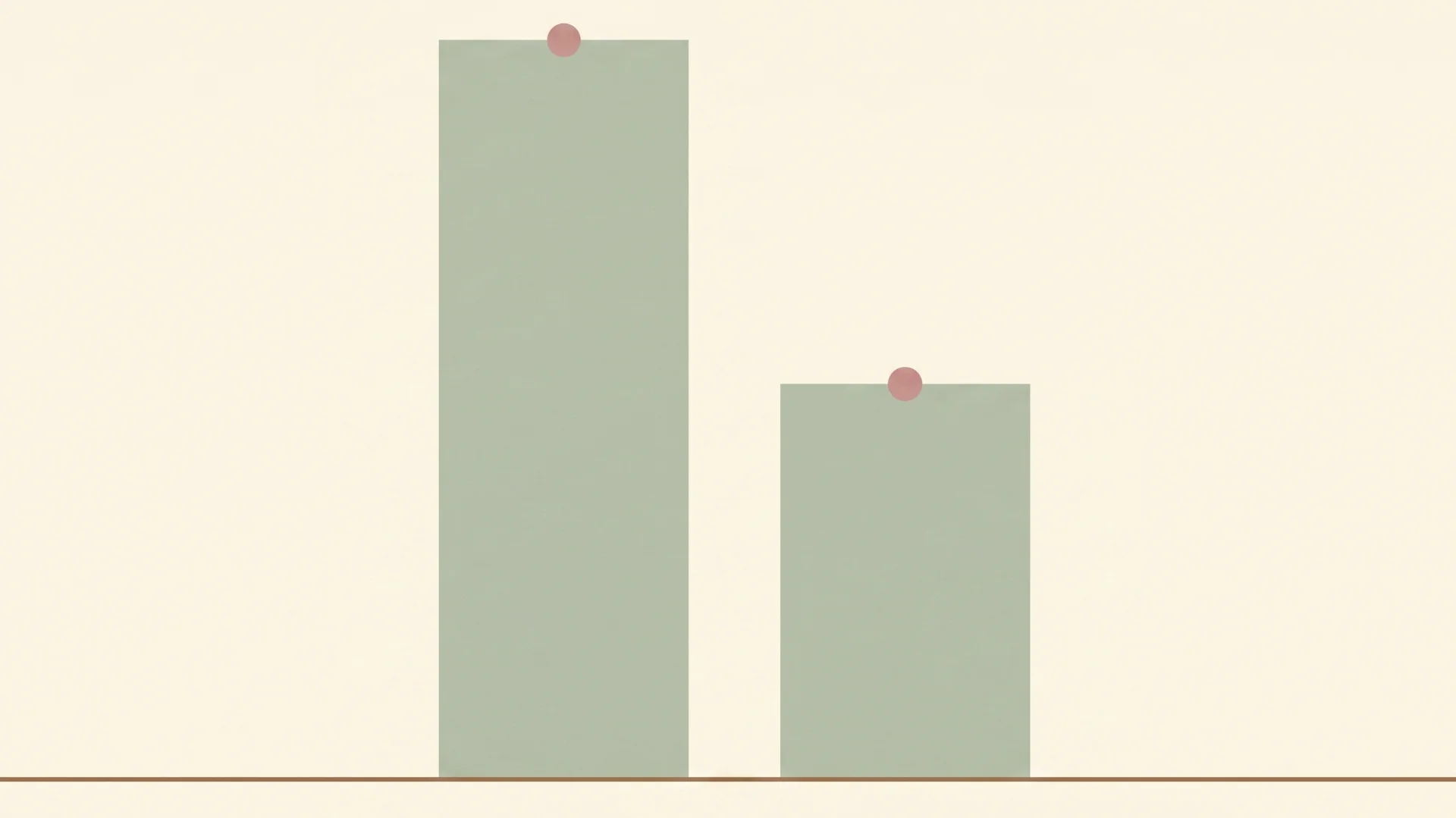
What the 2023 Pigott reanalysis of the STAR*D trial found — a cumulative remission rate near 35% rather than the originally published 67% after four sequential antidepressant strategies — and why that revision moves TMS earlier in the treatment pathway.
Article body
Patients researching depression treatment routinely encounter the headline figure from the Sequenced Treatment Alternatives to Relieve Depression (STARD) trial — that approximately two-thirds of patients eventually remit after up to four sequential antidepressant strategies.1 In 2023, Pigott and colleagues obtained the original patient-level STARD data and re-ran the analysis using the trial's pre-specified analytic plan. The cumulative remission rate they reported was approximately 35%, not the originally published 67%.2 This article walks through what STAR*D actually was, what the protocol-faithful reanalysis found and why, what the corrected figure does and does not mean clinically, and how the larger-than-previously-described treatment-resistant population reshapes the case for moving to next-line treatments — including transcranial magnetic stimulation (TMS) — earlier in the sequence.
What STAR*D actually was
STAR*D was the largest practical-effectiveness trial of sequential antidepressant strategies for major depressive disorder ever conducted. Funded by the National Institute of Mental Health and published in stages across 2006–2007 by Rush, Trivedi, Wisniewski and colleagues, the trial enrolled approximately 4,041 adult outpatients with non-psychotic major depressive disorder across 23 primary-care and 18 psychiatric sites in the United States.13
Patients moved through up to four sequential treatment steps, with each step delivered open-label and remission status assessed at the end of each:
- Step 1 — citalopram, titrated to a therapeutic dose over up to 14 weeks.
- Step 2 — for non-remitters: a switch to one of three alternative antidepressants, an augmentation of citalopram with one of two adjuncts, or cognitive therapy.
- Step 3 — for those still non-remitting: a further switch (to mirtazapine or nortriptyline) or augmentation (with lithium or T3).
- Step 4 — for the remainder: tranylcypromine, or the combination of mirtazapine plus venlafaxine.
The headline cumulative remission figure most widely cited — and reproduced in continuing-education modules and patient-education materials for the better part of two decades — was approximately 67% after four steps.1 The clinical narrative that grew up around that number was that depression, treated sequentially and patiently, eventually responds in most patients.
That narrative did not match what treating clinicians observed in routine practice. Pigott's reanalysis is what closed the gap between the published figure and the clinical experience.
What the Pigott 2023 reanalysis found
Pigott and colleagues obtained the original STAR*D patient-level dataset through a National Institute of Mental Health data-sharing process and re-ran the analysis as the protocol had specified before the trial began.2 Three methodological corrections accounted for the bulk of the discrepancy.
The pre-specified outcome measure. The STAR*D protocol designated the blinded Hamilton Rating Scale for Depression (HRSD), administered by a telephone-based clinical research interviewer who did not know which treatment a patient was on, as the primary outcome measure for the remission endpoint. The published reports instead emphasized remission rates derived from the Quick Inventory of Depressive Symptomatology (QIDS-SR), a self-report instrument administered in-clinic. The HRSD-based primary outcome produced a meaningfully lower remission rate than the QIDS-SR figure that anchored the published narrative.2
Inclusion of patients excluded post-hoc. The original primary analysis excluded a subset of enrolled patients on the basis of post-randomization HRSD criteria that had not been specified in the protocol. Restoring those patients to the analysis — as the protocol had stipulated — increased the denominator and lowered the cumulative remission rate.2
Consistent handling of dropouts. Patients who left the trial before a step-end assessment were treated inconsistently in the original published analyses. Applying the protocol-stipulated approach — counting patients who exited the trial before achieving documented remission as non-remitters — further lowered the cumulative figure.2
The result, reported in BMJ Open in 2023, was a cumulative remission rate of approximately 35% across the four sequential steps — about half of the originally reported 67%.2 The original investigators have published a reply defending the original analytic choices and disputing the reanalysis methodology; the exchange is itself an example of post-publication scientific debate functioning as it is meant to.4 The corrected figure is now broadly cited in the treatment-resistant depression literature and is the figure the Healing TMS Clinic editorial standard treats as canonical for cumulative real-world remission under sequential antidepressant therapy.
Why this matters clinically
The headline number a patient hears at the start of treatment shapes the patient's expectations and the clinician's threshold for escalating care. Replacing 67% with 35% is not a rhetorical adjustment; it changes three clinical conversations.
Treatment resistance is more prevalent than the original 67% implied. If approximately 35% of patients fully remit after four sequential antidepressant strategies, then roughly two-thirds — not roughly one-third — remain symptomatic at the end of the sequence. The patient population for whom serial monotherapy is not sufficient is meaningfully larger than the original report described. The clinical definition of treatment-resistant depression — failure to respond to ≥2 antidepressant trials of adequate dose and duration — captures a larger fraction of patients than the original cumulative figure suggested.
The case for earlier next-line treatment is stronger. If sequential antidepressant therapy has a lower ceiling than the published 67% implied, the opportunity cost of staying inside the medication sequence — through Step 3, through Step 4, through additional augmentation strategies after that — is higher. Each additional step takes weeks-to-months of titration and adequate-trial duration, accumulates side-effect burden, and delays evidence-based next-line treatments for patients who, statistically, are unlikely to remit on the next medication. Moving to TMS earlier in the sequence becomes more clinically defensible.
The patient narrative changes. Patients who began treatment under the framing that "two-thirds of people respond to sequential antidepressants" had an unrealistically rosy expectation; many who did not remit understandably concluded the failure was personal. The corrected 35% figure, while less optimistic, aligns the patient-education narrative with what treating clinicians observe in practice — and it correctly frames non-remission after multiple medication trials as a statistically common outcome that calls for a different treatment strategy, not a personal failure of effort.
What the reanalysis does not mean
Reanalyses of large trials are part of how science self-corrects. The Pigott 2023 figures are widely cited because the methodological argument is straightforward — the trial had a pre-specified analytic plan, and applying it produces a lower cumulative remission rate than the published narrative. The reanalysis does not, however, support several stronger claims sometimes layered on top of it.
It does not mean the original STAR*D investigators were "wrong." The original team reported the analysis they conducted, and they have published a substantive reply defending their analytic choices.4 Scientific debate about which analytic decisions best represent a complex naturalistic trial is healthy; treating that debate as a verdict against the original investigators is a misreading of how the literature works.
It does not mean antidepressants do not work. A cumulative remission rate of ~35% across four sequential steps is not zero — many patients in STAR*D did remit, and antidepressants remain first-line for major depressive disorder per all major treatment guidelines.
It does not mean the 35% figure is a discouragement. It is an honest baseline. Patients and clinicians make better treatment decisions with the corrected figure than with the original because the corrected figure correctly identifies when sequential medication trials are unlikely to produce remission and a next-line treatment should be considered.
It does not relitigate the diagnostic boundary of TRD. The clinical specifier — failure of ≥2 antidepressant trials of adequate dose and duration in the current episode — is unchanged.5 What changes is the estimated size of the population that meets that specifier, which is larger than the original STAR*D figure implied.
What the corrected figure means for TMS
TMS is FDA-cleared for adult major depressive disorder in patients who have failed to achieve satisfactory improvement from prior antidepressant medication in the current episode. The clearance pathway dates to the 2008 510(k) K061053.6 Insurance coverage criteria for TMS are anchored to that "failed to achieve satisfactory improvement" language, typically operationalized as two or more adequate antidepressant trials in the current episode plus, depending on the payer, a trial of psychotherapy and documentation of functional impairment.
Two implications of the Pigott reanalysis bear on TMS specifically.
The TMS-eligible population is larger than the original STAR*D figure implied. If approximately two-thirds of patients do not remit after sequential antidepressant therapy, then the population meeting the FDA-cleared TMS indication — the population for whom the TMS therapy conversation is clinically appropriate — is substantially larger than the original 67%-remission framing suggested. The patients who reach a TMS evaluation are not a statistical anomaly; they are a statistically expected outcome of sequential antidepressant therapy.
Earlier referral to TMS is supported by both the corrected efficacy data and the cumulative-burden argument. Real-world TMS response rates approximate 58% with remission near 37% in routine clinical practice in patients who have failed prior antidepressant trials — figures consistent with the original Carpenter 2012 multisite naturalistic cohort and reinforced by subsequent registries.7 These response and remission figures are derived in a population that is, by enrollment criteria, already treatment-resistant. The Pigott reanalysis does not change those TMS-specific figures; it changes the comparison case — the realistic expectation for what staying inside the antidepressant sequence would have produced. The Clinical TMS Society consensus is the device-agnostic reference for protocol selection, parameter choice, and the indication framework.8
What it means for psychotherapy and ongoing pharmacotherapy
Psychotherapy. Cognitive-behavioral therapy and other evidence-based psychotherapies remain first-line for major depressive disorder per all major treatment guidelines and are a parallel — not a competing — track to pharmacotherapy. The Pigott reanalysis does not invalidate the psychotherapy evidence base.
Continued medication management. Most patients who proceed to TMS continue their antidepressant during and after treatment. The Pigott reanalysis does not change the case for ongoing medication management; it reframes the expectation that additional sequential medication trials, alone, will produce remission in a patient who has already failed two adequate trials.
The Pigott reanalysis is most consequential for the earlier introduction of TMS in patients who meet TRD criteria, because it reframes the realistic expectation of what additional medication steps alone would accomplish.
Key takeaways
- The originally published STAR*D cumulative remission rate of approximately 67% across four sequential antidepressant steps1 is, per the Pigott 2023 protocol-faithful reanalysis, approximately 35% — about half the originally reported figure.2
- The discrepancy is accounted for by three methodological corrections: using the protocol-specified blinded HRSD as the primary outcome measure, including patients excluded post-hoc from the original analysis, and applying consistent handling of dropouts as non-remitters.2
- The corrected figure does not mean STAR*D was "wrong" or that antidepressants do not work; it means the realistic ceiling on cumulative remission under sequential antidepressant therapy is lower than the published narrative implied, and the original investigators have published a reply defending their analytic choices.4
- The treatment-resistant population — patients who fail to remit after ≥2 adequate antidepressant trials in the current episode — is larger than the original STAR*D figure implied, and the clinical definition of TRD is unchanged.5
- TMS is FDA-cleared for the patient population that has failed prior antidepressant medication (510(k) K061053, 2008), with real-world response rates approximating 58% and remission rates near 37% in routine clinical practice.67 The Pigott reanalysis strengthens the case for earlier referral to TMS in patients meeting TRD criteria, not by improving TMS's reported efficacy but by lowering the realistic expectation of what additional medication steps would accomplish.
Patients across Anaheim and Orange County who have completed two or more antidepressant trials in the current episode without remission are squarely within the patient population the corrected STAR*D figures describe. Our psychiatrists review prior medication history, confirm TRD criteria, and discuss whether TMS therapy is clinically appropriate before any scheduling. Most patients begin with an insurance verification so the coverage picture is clear before the clinical conversation.
Sources / Further reading
Rush AJ, Trivedi MH, Wisniewski SR, et al. Acute and longer-term outcomes in depressed outpatients requiring one or several treatment steps: a STAR*D report. Am J Psychiatry. 2006;163(11):1905–1917. ↩ ↩ ↩ ↩
Pigott HE, Kim T, Xu C, Kirsch I, Amsterdam J. What are the treatment remission, response and extent of improvement rates after up to four trials of antidepressant therapies in real-world depressed patients? A reanalysis of the STAR*D study's patient-level data with fidelity to the original research protocol. BMJ Open. 2023;13(7):e063095. ↩ ↩ ↩ ↩ ↩ ↩ ↩ ↩
Trivedi MH, Rush AJ, Wisniewski SR, et al. Evaluation of outcomes with citalopram for depression using measurement-based care in STAR*D: implications for clinical practice. Am J Psychiatry. 2006;163(1):28–40. ↩
Rush AJ, Trivedi MH, Wisniewski SR, et al. The STAR*D Data Remain Strong: Reply. Am J Psychiatry. 2023;180(8):617–618. ↩ ↩ ↩
Gaynes BN, Lux L, Gartlehner G, et al. Defining treatment-resistant depression. Depress Anxiety. 2020;37(2):134–145. ↩ ↩
U.S. Food and Drug Administration. 510(k) Premarket Notification K061053, NeuroStar TMS Therapy System (Neuronetics, Inc.), cleared 2008 for treatment of major depressive disorder in adult patients who have failed to achieve satisfactory improvement from prior antidepressant medication. ↩ ↩
Carpenter LL, Janicak PG, Aaronson ST, et al. Transcranial magnetic stimulation (TMS) for major depression: a multisite, naturalistic, observational study of acute treatment outcomes in clinical practice. Depress Anxiety. 2012;29(7):587–596. ↩ ↩
Perera T, George MS, Grammer G, Janicak PG, Pascual-Leone A, Wirecki TS. The Clinical TMS Society Consensus Review and Treatment Recommendations for TMS Therapy for Major Depressive Disorder. Brain Stimul. 2016;9(3):336–346. ↩